


Energy Hub
Generate. Store. Control.
Your own energy for the building, the fleet and customers.
Managed as one whole.
One place. More value.
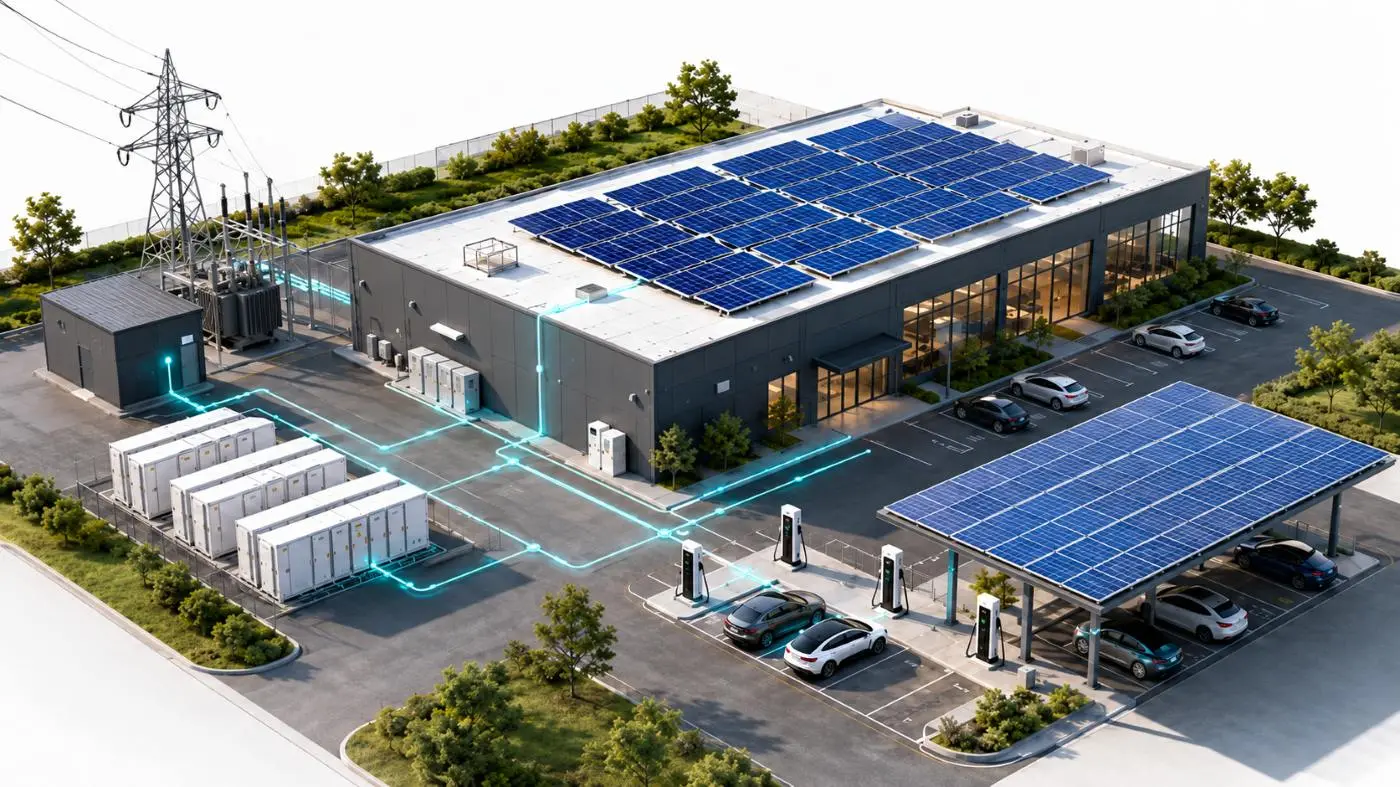
The energy hub connects generation,
storage, charging and control.
The system works with its own energy and manages in real time
the load of the entire site. The result is readiness for the growth
of electromobility without unnecessary interventions in connected power.
PV
Energy from roofs and carports.
BESS
Batteries store the surplus for later.
Charging
AC and DC depending on operation and turnover.
EMS
Managing prices, power and priorities.
Energy flow
Energy flows where it creates value at that moment.
Fewer peaks. More control.
EMS – the energy management system – balances generation, battery, charging and grid consumption according to the current situation.
Grid connection
The grid tops up energy when you need it.
Ideally when it is most favourable.
A benefit with direction
An investment you have
under control.
Target payback period
The actual result will depend on consumption, the charging profile, energy prices and the design of the solution.
01
I generate
I use my own PV energy directly on site.
02
I store
I put the surplus into the battery for later use.
03
I control
The EMS protects the connected power and decides according to priorities.
BESS and EMS can often postpone or reduce the scope of costly reinforcement of the grid connection or transformer station.
* For a corporate site with annual consumption of 850 MWh, we designed an energy hub with a PV system of 486 kWp (450 kWp rooftop PV, 36 kWp carport PV), a 241 kWh battery storage system and ten AC charging points for an electric vehicle fleet. The photovoltaics can generate approximately 510 MWh of electricity per year, while the fleet itself consumes roughly 52 MWh per year. With high self-consumption, charging management and peak-power reduction, the model scenario gives a simple payback of approximately 5.8 years. We always verify the actual result against the fifteen-minute load profile, the tariff, the reserved capacity and the real charging pattern.
Who the energoHUB is for
A parking lot today.
An energy node tomorrow.
+32 %
year-on-year growth of new BEVs
January–August 2026, Czech Republic
Source: CDV, 4 September 2026
In a working scenario, by 2040 electric vehicles could make up
15–20% of the vehicle fleet.
Where a hub makes the most sense:
P+R
Parking and mobility
Logistics
Fleets and shift operations
Cities
Public infrastructure
Retail
Customer parking
From a parking lot to an energy hub
A process that gives the project structure.
01
Energy study
Data on consumption, capacity and goals.
02
Traffic study
Vehicle movements, turnover and parking duration.
03
Hub design
PV, BESS, charging and EMS variants.
04
Project and permits
Documentation, grid connection and coordination.
05
Construction
Implementation, testing and handover.
06
Operation and CPO (Charge Point Operator)
Monitoring, pricing, payments and administration.